Saturday, 17 April 2021

Table Talk with Kirtana Kumar

Our guest for the first episode is Kirtana Kumar, theatre practitioner.

During lockdown, Kirtana and her family moved base to their farm. We'll talk about how that has worked out, the unromanticised view of what farm life actually is from an urban person's point of view, its effect on her theatre practice, food and politics and what she's learned about it in these months (including a project she is working on), and other things that take our fancy.

We'll also make time for questions from the audience.

Friday, 9 April 2021

Table Talk

If you’re on Facebook, chances are I have invited you to join Simple recipes for complicated times, a group I run. If you’re in the group, skip the next two paragraphs.

It was a sort of reaction to lockdown, a way for people like me, unaccustomed to cooking or managing their kitchens to get some simple recipe ideas, tips on how to work with whatever was available, and so on, from more experienced folks. It took off rather rapidly, thanks to folks like you who saw usefulness in it and invited friends in and helped spread the word. Membership grew rapidly, until we began moderating join requests as a way of cutting clutter. It’s now at around 6,800. (The group even got a bit of kind press coverage, finding mentions in these pieces by Paromitra Vohra, Priya Ramani, Ranjini Rao, and Manjula Padmanabhan.)

On March 19th, we completed a year. As a way or marking the date, (‘celebration’ seems like the wrong word to use for something born of a crisis), I hosted a couple of video chats on the group, which were fun.

Going ahead, I plan to host a fortnightly chat, each time with a different guest (or guests, max three people). It’s called Table Talk and will be live once a fortnight, on Sundays, 9 p.m. IST. I'll also archive these to YouTube or similar for those who couldn’t be there for the live webcast.

The idea is to have my guests tell stories — which could be in many kinds of media — or do a lecture or a tutorial or a demonstration, or have a debate or chat with two or three people, maybe even things like quizzes. All connected to recipes, cooking and food, of course. This would be for around an hour, maybe more (who am I kidding; definitely more). And then we’d throw it open to the audience to join in, with questions, discussion, debate, because the purpose is to involve the community, for another half-hour or more.

Topics for the first few sessions include: what it takes to actually give up the city and live the farm life, with asides on what kitchen ingredients you may want to carry with you if you’re spending a short stint in another country; summer foods and beverages and also food and literature; tales from one of the group’s most popular story-tellers; what a food reviewer looks for and also why not to be constrained by recipes; writing food for kids, with a reading; a peek into an artist’s travel diaries and a bit about food and art; culinary anthropology and what we know about what ancient Indians ate; creole foods and exploring creole cultures. And more to come.

That lovely logo? Hand-lettered by my talented friend the designer, artist, calligrapher and storyteller Kriti Monga, who was a founding member of the group and frequent contributor.

Gratitude to my friend Shubha Sharma who brainstormed the idea with me and came up with many of the possible subjects we'll be exploring, and Nilanjana S Roy, Manjula Padmanabhan, Rimi N, Venkat Krishnan N, Sameera Khan, Prem Panicker, Kurush F Dalal, Rashmi Dhanwani, Richa Dubey, Anita Vasudeva, Anita Roy, who all took time to critique the idea and offer me their thoughts and suggestions.

If you’d like advance notice of shows, and links to recordings, please subscribe to the Google Group and/or the Telegram Channel. Both are one-way: only admins, i.e., me, can post, so you won’t get any clutter on your inbox. There will be, at most, three messages a week: advance notice of the next live show, and links to recordings of shows just gone by.

Who has been on the show so far? These folks.

Want to be on the show? Get in touch.

p.s. You’ll notice, if you’ve been nice and subscribed to the Google Group and/or the Telegram Channel, that they also reference ‘For Pete's Sake.’ That’s another project I’m developing, about which more soon.

Monday, 23 November 2020

Annus mirabilis

The day just past marked a year since my last day at The Hindu.

This day last year marked the beginning of a week spent on the first actual holiday I’d had in eleven years, just sleeping a lot, reading, being self-indulgent. A week later, I began working on a proposal for some linked non-profit projects I’d been putting aside for years, and a plan for a book project I could do alongside. This was going to be the start of a year of self-discovery, of indulging myself by doing work I wanted to, and to hell with the money, doing just a bit of pay-the-bills work on the way.

But life, as it often does, had other plans. Like death. Dad, the last member of my immediate family got ill, two months were spent between hospital and home and then a sickbed, then he died.

Suddenly I was living completely alone. Suddenly, my life decisions would affect no one but me.

And I was paralysed by freedom.

Weeks went by when I could do nothing except walk every day, a couple of kilometres every day at first, slowly ramping up to 15. And then a health scare that made me pause. And made me pay closer attention to stories I’d been reading about a city called Wuhan and an epidemic of serious disease that then seemed to leap to an area called Lombardy. It seemed inevitable then that the contagion would reach us sooner rather than later. I stocked my kitchen and locked down before the thaalis and taalis.

And so nine months have passed, baby.

I had to put the projects and the book plan aside (they all needed me to travel). The kind of jobs I wanted were getting scarcer; many I know lost employment that seemed secure, and there was no freelance on offer. My health has been up and down.

But, you know what? It’s not been a wasted year.

For one, low phases aside, I’m healthy, net net. (And three Coronavirus tests came out negative.)

Thanks to once having been too broke to pay hospital bills, I had saved madly for medical emergencies I thought would come. Instead, I wound up prepared for the truly unforeseen, with savings to pay rent in the quiet neighbourhood I live in (and a landlord, bless his usually miserly heart, who hasn’t raised it, though he was contractually entitled to). I was in a godawful mental slump a few months, and I pulled myself together with this thought.

I learnt, thanks to the generosity of many of you, and a group I started, how to feed myself better, more nutritiously, with more variety, with stuff I had never encountered before. And with less waste. (Peels and scraps and bones and such are frozen, then made into stock; all remnants are composted; the only waste I generate is packaging from food, and that is one dustbinful a month.) In the time to come when we can visit each other, I won’t be famous for my dinner parties, but I’ll invite you to stay for a meal without embarrassment.

And I helped start and run two other projects that were not even on my horizon nine months ago.

Thanks to being able to afford that quiet neighbourhood (and male privilege) I was able to walk every night. I haven’t been able to do any art or poetry, strangely, but I’m not too worried about that; those things come when they come; when they do, I’ll be there.

My closest friends are still my closest friends, we talk more than we did before (though I’d also like to hug them, and that will have to wait). Friends who’d been too busy to keep in touch — more likely, truth be told, I’d been too busy or worked hours too weird to keep in touch with them — were chatting again. Some folks I knew only slightly have now become close too. Together, we talked each other through this weird reality we find ourselves in, across the world, sharing stories, sharing memories, sharing hopes.

No, not a wonderful year, but yes, a wonderful year.

Tuesday, 10 November 2020

❤️

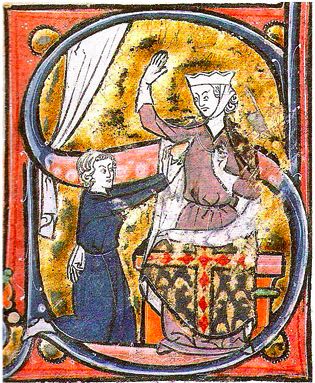
The ❤️. When did it become a symbol of love? For that matter, why is it called a heart symbol, when it doesn't look like a human heart?

Image
Illustration from a drop-letter in 'Roman de la poire,' which dates back to around 1250 CE. The first known depiction of a heart as a symbol of romantic love.

We know that we associate the heart with emotions. And that became a symbol of romance in medieval Europe, particularly the Renaissance, when it figured art showing Christ and his 'sacred heart.' It also was used as one of the four suits in European playing cards. By the 1700s, it began featuring in Valentine’s Day cards.

I read also that a symbol much like it has been seen on cave paintings dating back to 8000 BCE or more, like before the last Ice Age, but what meaning those painters may have ascribed to it is unknown. And in the Voodoo religion, the heart icon is the symbol of Erzulie, the loa of love, beauty, and purity. In Ghana, the Asante used the symbol in Adinkra, hand-embroidered cloths that represented social thought and belief, to represent love.

But I digress. Why was this shape the symbol for a heart, which to our eyes, looks rather different?

One theory associates it with saunf, fennel. Or rather, silphium a species of giant fennel now extinct. Silphium grew on the North African coastline. Greeks and Romans used it as a spice, a medicine for coughs, but also as a contraceptive. Poets praised this latter quality. It was cultivated into extinction by the first century CE. In images from the era (the city-state of Cyrene, which prospered with the silphium trade, put the shape on its money, for one) the silphium seed looks like the ❤️.

Some theories say it is based on ivy or water-lily leaves. (Ancient Greeks associated ivy with Dionysus, god of sensual things, which may have lead to its association with sex and then romantic love.) Others say that that it was based on the shape of breasts or buttocks or the pubic mound or vulva or testicles.

The Catholic church's story is that a saint Margaret Mary Alacoque a vision in which the sacred heart of Jesus appeared to her in this shape, with thorns around it. This vision was in the 1600s, much after the symbol (sans thorns) was already well known, so doesn't explain the origins, but since the church had no small influence in Europe, it accounts for its further spread. (Before this, in heraldry, the heart signified sincerity, eventually became synonymous with the holy grail. Some playing cards use the holy grail instead of the heart symbol.)

Some scholars argue for a more simple evolution. They say it originates in the writings of Aristotle, who said the human heart had three chambers with a dent in the middle, and when artists in the Middle Ages drew representations of ancient texts, this is what they came up with. Some say says that the symbol does resemble the chambers of the heart cut open. Bird or reptile hearts are closer in shape to the symbol, and since early anatomical study was based on the dissection of animals, this sounds viable.

At any rate, most early graphic depictions in Europe were sort of pine-cone shaped, and upside-down, at least from our perspective. In the 1400s, a dent began to appear on the base, first small, then getting bigger. By the mid-1500s, it depiction on playing cards was the one we know today.

We no longer think of the heart as the seat of emotions, or of love, though it persists in language. And emoji. An example of iconographic inertia, to use a phrase coined by Nicholson Baker.

(All this is the product of one of those trips down rabbit holes when one goes to look up something. Maybe you'll find it interesting too.)

Sunday, 25 October 2020

It isn’t done

You’ve stayed the course.
Since March, you’ve stayed home as much as you can, perhaps 100%, perhaps close. If you’ve ventured out, you’ve done so masked, maybe double-masked, maybe with a visor, perhaps gloves, to pick up essential supplies. Whatever you brought home, you immediately sanitised. If you’ve had home delivery, you’ve answered the door masked, and immediately sanitised everything, after, of course, tipping the delivery person, because you know they are indispensable now. You’ve cooked what ingredients you have.
You’ve had only the people at home for company — sometimes that’s good, but you could still use a break, sometimes that’s awful, and my heart goes out to you — or perhaps you live alone. You haven’t spoken to friends in person for months. You’re sick of video meetings and working from home though you’re grateful to have a job, let alone one that lets you work from home. Or you’re out of a job and wondering how long the savings will stretch. You know that you’re better off than so many others, and you’ve tried to do your bit to help those less fortunate. You’ve stayed TF home.
But you’ve had enough. You’re *so* done with the virus.
You want to scream. You want to walk without a mask. You want to walk without fear. You want to just go out and have a normal day. And you think, why not?
After all, restrictions are being eased; lockdown is officially over in some places. And all around you, you see people returning to work, going out to shops, hanging out in each other’s homes. Going to restaurants. Celebrating festivals in crowds.
But it isn’t over.
Yes, numbers are down. But they’re not anywhere near zero yet. And if you look around, around the world, you’ll see that wherever restrictions have been lifted before numbers were down to trivial, opening up has resulted in infections rising again. Yesterday, the USA, which has been opening up, recorded its highest single day of new cases.
In India, many people who have no option are returning to work, to commuting. Restaurants are now open, and are filling up. With festival season starting, and social distancing being sacrificed at the altar of bonhomie and enjoyment, not to speak of the start of cooler weather, which results in more pollution and a rise in respiratory ailments, it seems inevitable that we will see a rise too.
Also, complacency has set in. I’m seeing people walking around without masks, or lowering their masks to sneeze or cough (!) or to talk on the phone. That last one puzzles me most; I use an old-style candybar phone, and folks I talk to can hear me through the mask; people with fancy touchscreen phones shouldn't be having issues.
So, friends, if your circumstances permit it, continue working from home. When you do go out, remember social distancing and wearing masks, carrying sanitiser and washing hands obsessively.
You’ve stayed the course, so don’t let all the sacrifices you’ve made so far, all the inconveniences you’ve faced, all the behaviours you’ve modified, be in vain.
You’re so done with the virus. But the virus ain’t done with us.

Monday, 19 October 2020

Poetry with Prakriti: a brand new avataar

Prakriti Foundation's Poetry with Prakriti festival is responding to travel and public gathering restrictions by reinventing itself as an online festival, with readings on Zoom, on the first three Saturdays of every month, starting October 2020 and running up to September next 2021 from 7 p.m. IST.

The poets featured will be a mix of well-loved names and emerging voices, in English and other languages, from India and abroad. The format is to have one poet on each evening, to read their poems for 15 minutes or thereabouts, followed by around 15 minutes of answering questions from the audience.

I’m helping out with the festival in a couple of ways: acting as moderator for the Q&A sessions that will follow each reading, and in outreach.

Here’s how you (and any poetry-loving folks you know and care to forward this to) can get notified of who is reading and when.
1. You can sign up for updates at https://groups.google.com/group/poetrywithprakriti. (This is a one-way newsgroup. I.e., there will only be emails from the admins, who are Meera Krishnan of Prakriti Foundation and I, and no back-and-forth chatter. There will be three emails a month, approximately, telling you who the poet reading the following Saturday will be, and giving you the registration link.)
2. Or, email Meera at prakritifoundation at gmail and she’ll add you to their mailing list.
3. Or if you’d prefer your updates on WhatsApp, please contact Meera or me with your phone number, or email her at the same address.

On social media, you can follow Prakriti Foundation on
• Facebook
• Twitter
• Instagram
• LinkedIn
If you could amplify posts on those platforms, we would be very grateful.

And yes, please share this with friends whom you think might be interested.


Prakriti Foundation is an arts and culture NGO in Chennai (India), founded in 1998. In a city accustomed to a regular diet of classical performance, Prakriti has been the space where scholars, researchers, artists, critics, poets, and filmmakers have been able to present their work to those who engage with it on serious terms. One of its four annual festivals, Poetry with Prakriti, features eminent and emerging poets (from India and abroad), with each presenting four different readings of their poems to small, intimate audiences at several venues in the city: schools, colleges, cafes, galleries, boutiques, banks, IT parks, green public parks, and other commercial establishments.

Saturday, 25 July 2020

I have a joke

There was this Twitter thing that happened, and I got infected. (Some of these I added later.)

I have a joke about telepathy.

I have a joke about Bombay Winter.

I have a joke on the Indian education system, but I haven’t memorised it.

I have a joke about HR, but I had to downsize it.

I have a joke on advertising, but I have to put my creative director’s name in the credits.

I have a joke on this government’s strategy for dealing with the pandemic, and I think everyone will get it.

I have a joke on Aadhaar, but it can be traced back to me.

I have a joke about encounters. It will slay you.

I have a joke about cake, but it’s still half-baked.

I have a joke about Retweets, and y’all just going to Like it.

I have a joke on CSR funds, but I had to give it to PM CARES.

I have a joke on the freemium model, but you’ve already read your 10 free jokes.

I have a joke on nepotism, but it’s a dad joke.

I have a joke about insomnia, but I think I’ll sleep on it.

I have a joke about petroleum but it’s crude.

I almost have a joke about hypotenuses, but I just can’t get the right angle.

I have a joke about dickpics; I’ll DM it to you.

I have a joke about Unilever’s skin cosmetics, but that wouldn't be fair.

I have a joke on right-wing historians, but I need to rewrite it.

I want to do a joke about start-ups in India, but I haven’t found an American idea to localise.

I have a joke about poetry in India, but I’d have to self-publish.

I have a joke about starting a bakery, but I really knead the dough.

I have a joke about the ubermensch, but it would only work for a nietzsche audience.

I have a joke about philanthropy, but I just can’t give it away without seeing your five-year plan for scaling up.

I have a joke about publishing in India, but it will only reach 5000 people.

I have a joke about banana bread, but everyone’s already making it.

I have a joke about newspapers, but we have to shutter the edition because we have no ads.

I have your joke about mansplaining and I’m going to tell it to you.

I have a joke about Greek yogurt but it’s against Indian culture.

I have a joke about the I have a joke jokes, but it doesn’t meta.

I have a joke about insomnia, but I think I'll sleep on it.

I have a joke about rashtriyans on Quora, but .. excuse me, phone call.. Yeah Agrima?

…

I have a joke about history, but I'd be repeating myself.

I have a joke about my advertising clients, but after I'm done with the focus groups.

I have a Delhi police joke. It has a punchline.

I have a joke about the Sirens, but you're not listening.

I have a Lakshman joke, but it might cross the line.

I was going to do a joke about International Female Orgasm Day on the 31st, but I didn't hit the spot.

I have a joke about vaccination. But young folk may not get it.

I have a joke about collarbones, but it's not humerus. (This came from another Twitter discourse.)

Saturday, 18 July 2020

The Goa Project Sessions

Since May, I've been helping The Goa Project shape something we're calling the TGP Sessions.

Background: The Goa Project is an annual unconference that happens in Goa. Unconference? The attendees pitch sessions and vote for who gets stage time. (I wrote a piece about it back in 2017, much before I first volunteered, if you want a then-outsider's point of view.)

Image is a poster with the logotype 'The Goa Project Sessions' Below, the text says, 'Alternate Sundays. 5:30-6:30 PM, on Zoom.' In smaller type, below, the text says, 'The TGP Sessions aim to keep our community active, engaged, making new connections, collaborating. They are just like the TGP editions you are familiar with, except spread out over the year, for an hour at a time, and online. Attendance is free, but registration is required.'

The TGP Sessions is an idea we came up with as a way of keeping the community engaged in these lockdown times. (The community is people who have attended TGP editions in the past or contributed to them, or who participated in the first TGP Residency in 2018.) It's also a way to grow the community, since it's pretty clear that we won't be able to have a gathering in Goa any time in the near future.

We meet every alternate Sunday, between 5:30 p.m. and 6:30 p.m., IST, on Zoom. Attendance is free, but you need to register.

The Sessions go like this.

There are up to three segments, or sessions within a Sessions.

Up to two of these are 10-minute presentations of interesting ideas, things people are creating that are aimed at making for a better world, debates, and so on. These are each followed by 10 minutes of Q&A and discussion. Some Sessions we've had so far: an overview of the evolution of money, from gold to cryptocurrencies; valuing labour in a time of unprecedented economic shifts; building platforms for collaborations and communities; communities that have arisen as a response to the COVID-19 crisis and lockdown; arts and culture in times of pandemics; mental health in quarantine; a case for cutting up the Supreme Court; technology creative people are using; how live storytelling can transition to digital; alternative sexual lifestyles in India; how improv trains your mind; how to do good podcast and live online interviews.

And we conclude with what we call the creative showcase (again, not more than two of these on a given weekend), which is for artists and performers to show us things they're making: art, plays, music, poetry, anything that can be done through a Zoom window. We've had a duo that makes music that fuses Carnatic music with other forms, and a Odissi dancer making the case for dance for both physical and mental health. Coming up, photo essays, interactive theatre, poetry, more music.

Want to check out the sessions? You'll need to register on Zoom and you'll get the meeting ID and a unique password. Once you've got the feel of it, you may want to pitch a session. You can use this form to pitch a session and this one for the creative showcase. And we have a mailing list you could subscribe to, which notifies members of TGP events (currently one mail a week, usually on Friday, with the coming Sunday's line-up).

We encourage people to attend sessions before pitching. And to continue to attend once they've done a session. The idea is to build a community after all, one with no stars who only come in to present, where everyone contributes and collaborates. (Important note: none of this is paid for in cash. TGP is all volunteers who do stuff because they think it's worth doing. The result has been a rather interesting collection of people over the years, folks well worth your time to get to know, and the kind of collaborations and relationships that result when interesting minds bump into each other.)

Sunday, 3 May 2020

Favourite schemes

Airdrops of roses and whiskers on Amit-kins
Light copper’s lathis for warm wooden kickings
All of the activists tied up with strings
These are a few of my favourite things

Yellow journalists and Arnab my poodle
Door bells at midnight and News TV bamboozle
Wild talk that flies out through WhatsAppian pings
These are a few of my favourite things

Girls in white mourning and communal clashes
Snowflakes with long noses get fifty lashes
Silver white cashflows from corporate kings
These are a few of my favourite things

When a pup dies
When I lose a state
When I'm feeling feels
I simply remember my PM CARES s̶c̶a̶m̶ scheme
And then I don't feel so bad

Friday, 3 April 2020

The doors of managing perception

You know that it would be untrue
You know that I would be a feku
If I was to say to you
I know exactly what to do

Come on baby, light my pyre
Try to get the light on hire

It's time to isolate it's true
The situation's really dire
You clapped and yet we're in the goo
Wait a minute, gotta sue The Wire

Come on baby, light my pyre
Try to get the light on hire, haanh?

We could take care of the poor
We could push testing rates higher
Help the farmers, okay, yes, sure
Wait a minute, gotta sue The Wire

Come on baby, light my pyre
Try to get the light on hire, haanh?

You know that it would be untrue
You know that I would be a feku
If I was to say to you
I know exactly what to do

Come on baby, light my pyre
Try to get the light on hire